

Daniel Chapter 9 / What can we learn from a man who prayed in the desert 2,600 years ago? Actually, a lot!
Rick McNally / 2025
Daniel was a man of Judah. Before he was born, his country was broken into two. When he was young, perhaps about 15 years old, his country was decimated. He and many others of his people were taken to another country to live in exile. When many of us think of Daniel, we think of him as this young, impressive youth standing for his convictions – fiery furnace, lion’s den. By the time we reach our passage this morning, he is likely pushing 80 years old.
His circumstances are rough. Imagine your homeland being attacked and sacked as a young man and imagine growing up in a foreign land as a servant of their king. Yes, living in nicer places due to his status, but eschewing some of his privileges due to the harsh treatment of his people. Living under kings with different worldviews and different morals. Weeping for the history and condition of his people, the chosen people of God. Keeping faith in very difficult situations.
There came a time when Danielhad a revelation through study, a prayer of the heart, and a vision from heaven.
A Revelation through Study of God’s Word
When we take time to study God’s Word, God reveals things to us. Sometimes things about our own sin or shortcomings, sometimes about His goodness, sometimes about the situation we are struggling with. Sometimes all three. Such was the case in the life of the Old Testament’s Daniel.
Here is the text.
In the first year of Darius the son of Ahasuerus, by descent a Mede, who was made king over the realm of the Chaldeans— in the first year of his reign, I, Daniel, perceived in the books the number of years that, according to the word of the Lord to Jeremiah the prophet, must pass before the end of the desolations of Jerusalem, namely, seventy years. Daniel 9:1–2 (ESV)
In other words, at this particular time, Daniel was studying and perceived within the text of the prophet of Jeremiah and was thinking about their situation. As stated above he was taken into captivity as a young person, perhaps 15 years old, and at this point has been in Babylon for 65 years. Here are the passages he was likely reading from Jeremiah, narrowing them down for brevity’s sake.
This whole land shall become a ruin and a waste, and these nations shall serve the king of Babylon seventy years. Then after seventy years are completed, I will punish the king of Babylon and that nation, the land of the Chaldeans, for their iniquity, declares the Lord, making the land an everlasting waste. I will bring upon that land all the words that I have uttered against it, everything written in this book, which Jeremiah prophesied against all the nations. Jeremiah 25:11–13 (ESV)
“For thus says the Lord: When seventy years are completed for Babylon, I will visit you, and I will fulfill to you my promise and bring you back to this place. Jeremiah 29:10 (ESV)
So, as David was reading these things he says he “perceived” that the time was about up. That God promised to do something; to restore the Israelites to their home after 70 years and lay waste to their oppressive enemies. 70 – 65 = about 5 years left.
David perceived it was time for God to fulfill his promises.
David was a man who obviously was reading and interacting with available Scripture. I believe that all who call themselves Christians and all who consider themselves believers ought to be students of Scripture. If the prophets themselves were adamant scripture readers, and the apostles, and even the angels were, why not us? (James 5:10-12) Let us not shy away from Scriptural study but rather take upon ourselves the responsibility and reap their benefits.
A Prayer of the Heart
The next section of Daniel’s book is a long prayer to God. It is a masterclass in prayer, it is a masterclass in repentance, it is a masterclass in the doctrine of sin.
Daniel’s Attitude of Prayer / Daniel 9:3-4a
Then I turned my face to the Lord God, seeking him by prayer and pleas for mercy with fasting and sackcloth and ashes. I prayed to the Lord my God and made confession, Daniel 9:3–4a (ESV)
Let’s look at each of these things a little closer–
- Turned my face / the idea here is that Daniel turned his face toward God and focused on him alone.
- Seeking / God may be not far at any time, but sometimes we are far away or he seems far away. Daniel was seeking an audience with his true King; he wanted to beg him a favor.
- Pleas of Mercy / Daniel’s pleas were not pleas for God to give benefits and rewards to the righteous, but to the guilty. They deserved nothing from the Lord.
- Fasting, Sackcloth, Ashes / All three of these were symbolic of the condition of the heart of the person praying, they were outward signs of inward repentance.
Daniel’s Repentance Before God / Daniel 9:4b-15
This is the major section of the passage; as said before it speaks of God’s faithfulness and his people’s utter failures on a spiritual level. For those failures they found themselves in captivity for the last 65 years. While there were faithful ones among their number, the vast majority of the nation was not God focused, God honoring or faithful to his Word and Covenant.
Although Daniel seems to be cut of a different cloth than these from the histories of him that are told, he also is very human, and in his prayers in this section does not distance himself from these unfaithful people but places himself in their direct midst. He too, was one of the those who needed the mercy of God.
Instead of listing out the entire text of repentance here [Daniel 9:4b-15] I will first comment on it in a more general sense and second look at Daniel’s view of sin; third I will try to tie these together with some applications for you and I now, some 2,600 years removed.
Observations of Daniel’s Prayer of Repentance
- Daniel’s prayer is spurred on by attention to God’s Word, God’s Plan. If we know God’s Word we might better know how to pray.
- Daniel’s prayer is one of seriousness, even soberness.
- Daniel’s prayer shows that he understands the depth of their sins before God. (8 different words to describe their sin, 17 different times they are mentioned). Psalm 51:17, “The sacrifice acceptable to God is a broken spirit; a broken and contrite heart, O God, thou will not despise.”
- Daniel’s prayer doesn’t simply blame others, but takes responsibility and ownership within the larger group.OUR not THEIR sin. By praying this way he was also being an example to the rest of Israel and encouraging the proper repentance of others.
- Daniel’s prayer is tempered with a proper understanding of God’s righteousness, justice, and promises of love.
- Daniel’s prayer is specific and targeted, and lean’s on God’s very promises.
Daniel’s Understanding of the Sinful Condition of Israel
In this passage Israel’s sin is described with 8 different Hebrew words used 17 times. It is one of the great themes of this passage.
- Sinned / 4x / chata / 2398 / to miss the mark / to miss the goal
- Done Wrong / 1x / avah / 5753 / bend, twist, distort, pervert
- Acted Wickedly / 2x / rasha / 7561 / active sense “bad” or “mischievous”
- Rebelled / 2x / marad / 4775 / break away from authority, to resist
- Turned Aside / 2x / cuwr, suwr / 5493 / branched off down our own path
- Not Listened, Have not Obeyed / 3x / not heard, not payed attention
- Transgressed / 1x / abar, awbatr / 5674 / passed through where we shouldn’t have gone.
- Iniquities / 2x / avon, avown / perversity, depravity, iniquity, guilt or punishment of iniquities
Israel’s sin was stark and obvious for all to see, its standing with God was not good, and Daniel spoke with blunt and accurate words. The character of man has not changed, and the sin that God through Jesus covers is this same kind of awful. This is my sin. This is your sin. This is our sin.
The Characteristics of Our Just and Good God
In the midst of this text of confession of sin are hints to Daniel’s view of God himself—his character, his being, his morals.
- Great and awesome God, who keeps covenant and steadfast love with those who love him… Daniel 9:4 / He is faithful
- To you, O Lord belongs righteousness… Daniel 9:7 / He is righteous, not like us
- To the Lord our God belong mercy and forgiveness… Daniel 9:9 / He is merciful and forgiving
- He has confirmed his words, which he spoke against us and against our rulers who ruled us, by bringing upon us a great calamity … Daniel 9:12 / He said he was going to do it and he did, even his judgements and justice proves he is faithful
- The Lord has kept ready the calamity and has brought it upon us, for the Lord our God is righteous in all the works that he has done… Daniel 9:14 / He was right in doing it; it was not unjust
Some Application Points
As we come before God and pray for our country let us not pray in terms of confessional they or them, but we and us. We need God’s forgiveness. We are not greater than others in our culture, we have all sinned and fallen short of the glory of God.
- Recognizing our own sin is paramount to a proper prayer life and proper relationships with others. The self-righteous attitude is not one that God approves.
- Our sin is multifaceted and we should never underestimate what we are capable of in our sin; both individually and in groups.
- As we catalog our sins it would be good to equally catalog the goodness and righteousness of our good, merciful and generous God.
- Expect God to keep his Word; but make sure you understand his Word correctly first.
Daniel’s Request / Daniel 9:16-19
Now, finally, Daniel gets down to his specific request. The first half of the prayer was a very specific request for God’s mercy in spite of Israel’s sin.
His specific requests to God in light of this study and the condition of the hearts of Israel were;
- That God would turn his anger and wrath aside / O Lord, according to all your righteous acts, let your anger and your wrath turn away from your city Jerusalem, your holy hill… Daniel 9:16
- That God would hear his prayer and make his face shine upon His sanctuary again / Listen to the prayer of your servant and to his pleas for mercy, for your own sake, O Lord, make your face to shine upon your sanctuary, which is desolate. Daniel 9:17
- That God would see the state of his nation and people / O my God, incline your ear and hear. Open your eyes and see our desolations, and the city that is called by your name. Daniel 9:18
- That these things would be done because of his mercy / For we do not present our pleas before you because of our righteousness, but because of your great mercy. Daniel 9:18
- That God would forgive their sins / O Lord, hear, O Lord, forgive. Daniel 9:19
- That God would act on his Word and promises / O Lord pay attention and act. Daniel 9:19
- That God would not delay in his action / Delay not, for your own sake, O my God, because your city and your people are called by your name. Daniel 9:19
Would God answer? Does God answer the prayers of his people? Do these things that are prayed for seem like they are proper in their understanding of human nature, human offense, and the just but merciful character of God.
In Daniel’s case they were answered in some ways immediately, and in some ways over many years, and in other ways over many ages. Literally.


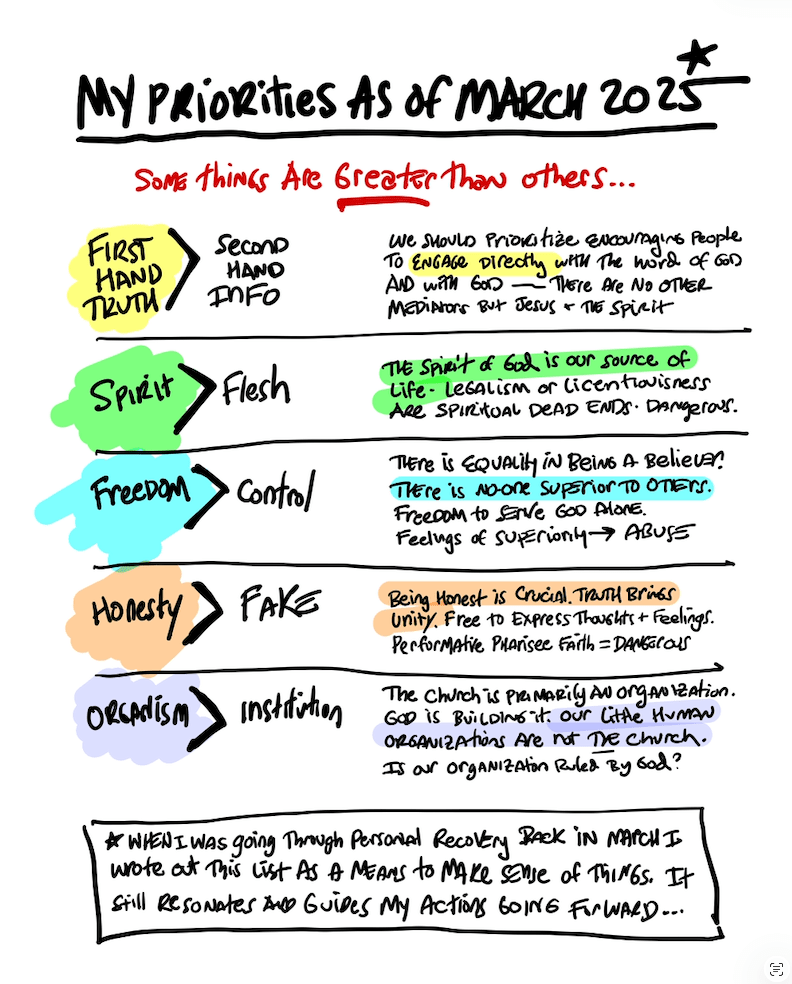

 First Hand Truth
Leave a comment