

Jesus the Messiah / The Time Between Old and New Testament Books, the Prophecies Fulfilled in Christ
Rick McNally / August 5, 2025
Within the connections between the Old Testament and the New Testament, we find the glue that holds them fast together; it is the anticipation of Messiah.
For the Jewish people of those ragged and painful days, it was the hope of One who would bring them the salvation that some of them longed for — and some dreaded. For the people during the days and times of Jesus Christ, it was the wonder and confusion of whether or not this rugged and humble individual was that Messiah. But, what of us today?
For us, this study of the connections between Old and New Testaments as it deals with the Messiahship that becomes one of the greatest bits of apologetics. It is significant in that it is (1) objective and (2) not based upon heresy and (3) concrete and grounded in history.
The New Testament presents a very broad, compelling argument for Jesus being the one spoken about and revealed in the Old Testament. It does so throughout its pages and is unrelenting in this one truth; Jesus is Messiah. Jesus alone is Messiah.
The Indisputable Time Between the Testaments
If you were to ask modern search engines such as ChatGPT and some biblical research tools, you get the following answers:
| Chat GPT | Logos AI | |
| Most Recent OT Book | 165 BCE | 400 BCE |
| Oldest NT Book | 50 BCE | 49/50 BCE, 45 BCE |
| 205 yrs | 445 yrs |
(see documentation at the bottom of the page)
We could also simply just find the date of the Greek translation of the Old Testament, the Septuagint, which was translated around 250 BC, but took likely many years to complete, not 70 days. So that gives us a hard-fast date to work with. Since the translation was completed somewhere around 250 BC, the books that they translated had to be finished by that time.
Taking this date of 250 BCE and the earliest NT book’s date, 45 AD, we have a distance of about 300 years. This is not a subjective answer, but an objective historical answer.
Putting this into perspective, we have the distance of some 250 years between the beginning of the United States and today’s date. This is a pretty long time.
Within the documents of the Old Testament, we have prophecies and indications that look forward to a future Messiah, and in the documentation of the New Testament, we have people, places, and events. So, as we look over the next few months at the comparison of these documents, put these things in mind. They are not decades apart but multiple centuries.
And that is not all. Many of the books are much, much farther removed than this. David’s prophetic writings date nearly 1,000 years before Christ.
Apologetics / A Defence of the Gospel of Jesus
If you want to give Christ and Christianity a chance in your mind, put this in mind. Do these documents speak about and identify a person with uncanny detail some 300-1,000 years in the far-flung future? If they do, embrace and believe in him.
Jesus walked a dusty road with two bedraggled and depressed believers who believed Jesus to have been irreversibly killed by the powers-that-be and were beyond grief. Jesus explained to them the following:
“And he said to them, “O foolish ones, and slow of heart to believe all that the prophets have spoken! Was it not necessary that the Christ should suffer these things and enter into his glory?” And beginning with Moses and all the Prophets, he interpreted to them in all the Scriptures the things concerning himself.” (Luke 24:25–27, ESV)
These men, too, were slow to believe but were convinced by a Bible study!
A Worthy Pursuit!
Consider the ancient scriptures as ancient, and the New Testament echoes of that ancient prophecy. See and judge for yourself the significance of these things. Use your own eyes. Engage your own mind. Open your spirit to the truth.
I will attempt, Lord willing, to release fairly regularly articles with these examinations under the heading of Jesus the Messiah.
Stay tuned. Study for yourself.
Rick McNally
___________________
Documentation
Chat GPT Answer / OT / The newest of the Old Testament books is generally considered to be the Book of Daniel or some of the later prophetic writings, which are believed to have been written or compiled around the 2nd century BCE, approximately in the 160s BCE. Some scholars date parts of Daniel to earlier periods, but the final form is often placed around 165 BCE during the Jewish resistance against Antiochus IV Epiphanes. So, the date of the newest of the Old Testament books is approximately around 165 BCE.
Chat GPT Answer / NT / The oldest of the New Testament books are generally considered to be the Pauline epistles, with some of them written around 50-60 CE. Specifically, 1 Thessalonians is often regarded as the earliest New Testament writing, likely composed around 50 CE. Therefore, the date of the oldest New Testament book is approximately around 50 CE.
Logos AI / OT / Based on the information provided in the articles, the newest book of the Old Testament is generally considered to be Malachi, which was written around 400 B.C.[1]. According to one of the articles, Malachi completed the Old Testament around this time, after which “the voice of prophecy was stilled”[1]. The article also mentions that, according to Jewish tradition and history, there was no prophet until John the Baptist, suggesting that Malachi was indeed the last book of the Old Testament[1]. It’s important to note that this date is an approximation, as the articles do not provide a more specific date for Malachi’s composition[1]. R. Laird Harris, Exploring the Basics of the Bible (Wheaton, IL: Crossway Books, 2002), 35.
Logos AI / NT /
The earliest New Testament book is likely to be one of Paul’s letters, with some scholars dating Galatians as early as AD 48/49[1]. However, there is debate about the exact dating of New Testament books. James, written by Jesus’ half-brother, is also considered one of the earliest, possibly dating to around AD 45[2]. The majority of New Testament books were written in the latter half of the first century AD, with the Gospel of John and Revelation generally dated to the 90s AD[1]. It’s important to note that these dates are approximate, as scholars continue to debate the exact chronology. The earliest undisputed manuscript of a New Testament book is the John Rylands Papyri (P52), dated AD 117-138, which contains a portion of the Gospel of John[3]. [1] James P. Sweeney, “Chronology of the New Testament,” in The Lexham Bible Dictionary, ed. John D. Barry et al. (Bellingham, WA: Lexham Press, 2016). [2] W. A. Criswell et al., eds., “The,” in Believer’s Study Bible, electronic ed. (Nashville: Thomas Nelson, 1991). [3] Norman L. Geisler, Systematic Theology, Volume One: Introduction, Bible (Minneapolis, MN: Bethany House Publishers, 2002), 462.
Perplexity / Septuagint / The Septuagint, the earliest extant Greek translation of the Hebrew Bible, was begun in Alexandria, Egypt, in the early to mid-3rd century BCE, with the first five books (the Pentateuch) likely translated between about 280–250 BCE under the reign of Ptolemy II Philadelphus (285–246 BCE). The translation of the remaining books continued over the next one to two centuries, with the process likely completed by the end of the 2nd or beginning of the 1st century BCE.
The oldest existing fragments of the Septuagint date from the 2nd and 1st centuries BCE, while the earliest complete manuscripts are from the 4th century CE. The traditional story of its creation is found in the Letter of Aristeas, which claims 72 Jewish scholars translated the Torah into Greek for the Library of Alexandria, but most scholars view this as a legendary rather than strictly historical account.


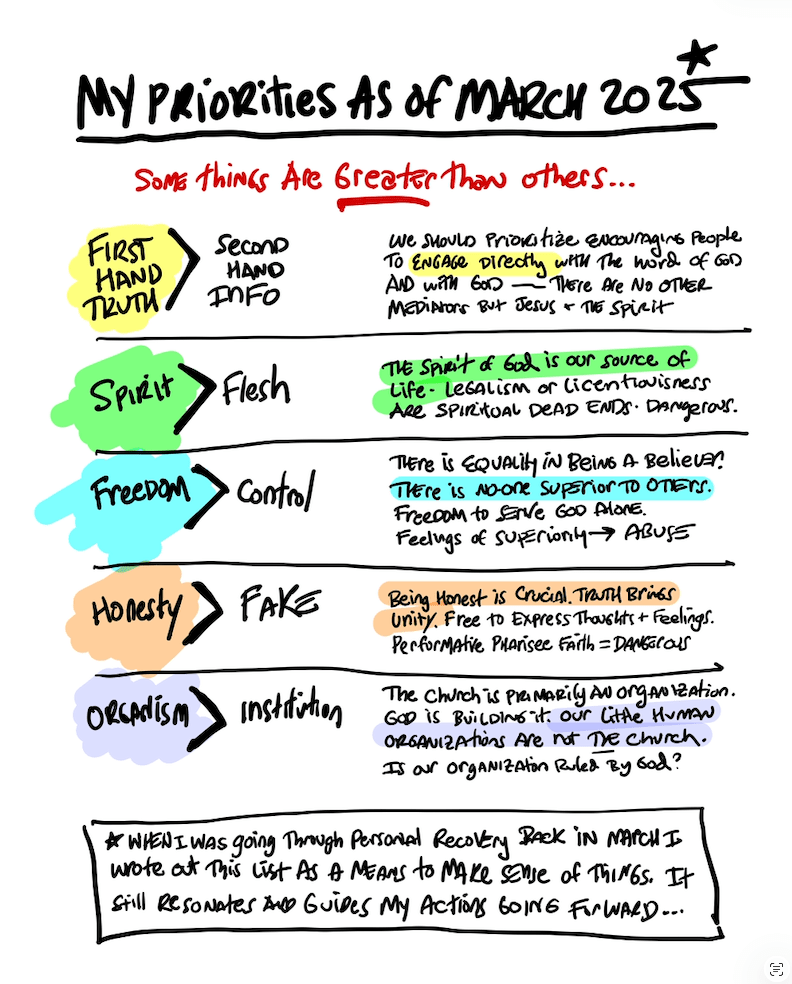

 First Hand Truth
Leave a comment