

Ephesians 4:13-16
Maturity Matters; it can help us avoid manipulation techniques and self-focused leaders.
I was playing chess the other day with one of my adult children, and it got me thinking. Boy, there’s a lot of deception going on here. There’s a huge desire for one player to manipulate and deceive the other player to gain an advantage, to whittle down, to bring them to the point of surrender so as to win the game.
Games are games; that is fine. But in real life, this shows up too. Life is cutthroat. Business is dog-eat-dog. But should it be this way in the church? It seems theologically we are members of one another, and when we “eat” or “defeat” one of our own, we are devouring ourselves, and even more frightening, we are devouring one who belongs to Jesus and is a member of his very body.
I have been a pastor for 30 years, and it seems to me that this kind of behavior is alive and well in the church today. It is rather sad. It is rather tragic. Politics — and all that goes with it — is baked into the boards and pastorates of our churches, and many are playing games of power and control. With the desire for power and control come the weapons that are wielded; tactics of manipulation, dishonesty, and sometimes intimidation. These should not be. These are the weapons of the Enemy, forces of the flesh — bitter in nature and effect.
Even in the corporate world, such things are looked down on as being unethical and shady. But in the church, they are things not of Christ but of the devil — the father of lies. This seems harsh, but I believe scripture would (and does) back me up on this. It actually preached this sermon first. We need to call out actions for what they are and not spiritualize it but call the actions what they are, the biblical words. Reframing a situation isn’t always for clarification; it is to cover up, and it can be a blatant lie.
There is an alternative, but it is more sacrificial and a difficult path. It will be, unfortunately, walked less often than the other one. Telling the truth, being honest, and being straightforward is God’s means of church polity. The Apostle John called it walking in the light.
And so, before we go any further, dear person, be ready to choose whom you will serve: the flesh or the Son. Deception or truth-telling. Once you choose a bit of deception, you open yourself up to more and more — there is a slippery slope that people cross and therefore are willing to cross again and again.
Ephesians 4:13-16 spells out this dichotomy clearly enough.
…so that we may no longer be children, tossed to and fro by the waves and carried about by every wind of doctrine, by human cunning, by craftiness in deceitful schemes. Rather, speaking the truth in love, we are to grow up in every way into him who is the head, into Christ, from whom the whole body, joined and held together by every joint with which it is equipped, when each part is working properly, makes the body grow so that it builds itself up in love.
One reason the Church exists is to get us to the point of maturity — and that maturity in this passage is partially defined by not “being children, tossed to and fro by the waves” or being “carried about” by storms of manipulative content and behavior. When there is manipulative behavior, be sure there is manipulative content somewhere in the wings, lurking there out of sight.
Here we find our two options. You can’t serve two masters. If you are engaging in this first one, you cannot, by definition, be engaging in the second. Purity, or error. Confession might make the difference and bridge the gap, but more deception will not.
Deceptive Manipulation
Here are the negative terms used in this short passage and a look at the word meanings informed from lexicons. Again, it kind of reminds me of a game of chess — schemes upon schemes with the intent of removal of adversaries.
- • waves
- • wind
- • human cunning
- • craftiness
- • deceitful
- • schemes
Let us look at each in turn;
Waves
Waves seem innocuous enough; they are just waves. There is rich imagery here. This is the picture of being disturbed and thrown into confusion. These are the tactics of manipulation and confusion; disrupt your opponent and make them doubt which direction is up or down, left or right. Waves are synonymous with doubt and confusion, as evidenced also by their usage in James 1:6, “let him ask in faith, with no doubting, for the one who doubts is like a wave of the sea that is driven and tossed by the wind.”
Waves are a tactic used by manipulative people to make you doubt reality, or confuse you into thinking what is false is true, and what is true is false. Being in a boat on the waves is a place where all stability has left you. There are modern terms for this behavior, such as any form of lying, or particularly gaslighting.
Wind
Wind can be symbolic language for being empty. This is some of the symbolism of the OT usages of such. Job 7:7, Is 12:2-6, Psalm 78:39 for examples. It is something that seems to have “weight” to it but in the end is actually made up of nothing. People in Proverbs are said that should they act poorly they will “inherit the wind.”
Wind is empty, it has no core, it is not solid, and is vain. Any false doctrine blown by the wind is that as well. It is like the waves above something that gets us to lose our footing on the truth and make us vulnerable.
Human Cunning
The source of this is human, not necessarily of the devil. It is people intentionally misleading others for their own twisted benefit. It is no accident. It comes from humans making the plans and causing disruption of truth. That’s the human part of this.
The “cunning” side is the Greek word kybeia for “cube” or “dice.” It is a game of chance played in the streets by people trying to take advantage of the gullible through sleight of hand. It is dishonest dealings for the sake of personal benefit. It is misrepresentation to take advantage of another. It is cheating, not playing by the established rules, trickery. It is godless. Well, maybe not if we’re talking about the Greek gods. This word is only used in the NT once, here in this context.
Craftiness
This word is panaurgia, which seems to be a compound word that includes anything or all for trade or profit. It has tof idea of duplicity and treachery, betrayal through deceit. When people have a desired outcome and are fleshly in nature, they will do anything they can to get their way. No betrayal is too big, no action out of bounds. This word is used some six times in the NT.
Deceitful
Both of the Greek words of the phrase “deceitful schemes” are negative in connotation, so we look at them individually and also as one unit. The word planē gives the impression of straying off the path, the path of truth, and thus the idea of actively misleading others away from truth to some form of mistruth, lie, or misdeed. This is the word for “Balaam’s error,” for the “spirit of error,” the “wandering sinner.” Error is untruth, and to lead someone there is deceitful.
Schemes
The Greek word for schemes is an uncommon one in the NT, used twice. The other place it is used is later in the same book of Ephesians in chapter 6:11; “Put on the whole armor of God, that you may be able to stand against the schemes of the devil. This word is never used for Jesus or the disciples, but rather for the devil and those attempting to put someone on the wrong path. The word is methodeia and it has as its meaning wiles, stratagems, and plans. As the Lexham Research Lexicon puts it, “a way of doing something (deceptive), especially in a systematic way; implies an orderly logical arrangement (usually in steps)”.
From this, we can see the idea of stratagems of coercion, and when other people are involved in the scheme, conspiracy. To conspire is to scheme with others against someone else in a deceptive or harmful way.
Deceitful Schemes
Putting this together, we get “deceitful schemes,” which just pushes us further into the idea that these are bad, bad things we are talking about. They are things that are self-serving and not respectful, kind, or loving. They are divorced from truth and divorced from love
Let’s review; try to take this group in as a whole. What is going on here? What is the intended outcome? Is this intentional? Is this coming from inside or outside of the church?
- • Waves / disorienting ideas or behavior
- • Wind / empty doctrine, perhaps given by empty people
- • Human Cunning / humans trying to deceptively take advantage of others through cheating and breaking the rules for their own advantage.
- • Craftiness / the willingness to do “whatever it takes” to get their way, usually involving treachery.
- • Deceitful / something that is off the path, that intentionally pulls others off the path
- • Schemes / plots and plans planned in advance to deceive and pull others down or away from reality or truth.
Elsewhere in scripture, we find similar passages with similar listings of manipulative tactics. I will add a few here in the form of a checklist to help you identify red flags of manipulative behavior. Not all red flags will check out, but when there are multiple of these, beware.
Spiritual abuse is described in these words: they are the lies that bring about theological abuse and the abuse of persons. Most people don’t know about this idea or would be hard-pressed to express or explain it.
Spiritual abuse is a misuse of power in a spiritual context in which a person or group uses various coercive and manipulative methods of controlling the victim, resulting in the abused individual experiencing spiritual, emotional/psychological, physical, or relational harm.
Karen Roudkovski, Understanding Spiritual Abuse: What It Is and How to Respond (Brentwood, TN: B&H Academic, 2024), 53.
Or, here is another definition…
Spiritual abuse is when a spiritual leader—such as a pastor, elder, or head of a Christian organization—wields his position of spiritual authority in such a way that he manipulates, domineers, bullies, and intimidates those under him as a means of maintaining his own power and control, even if he is convinced he is seeking biblical and kingdom-related goals.
Michael J. Kruger, Bully Pulpit: Confronting the Problem of Spiritual Abuse in the Church (Grand Rapids, MI: Zondervan Reflective, 2022), 24.
Is this only a new thing? Matthew Henry was a Presbyterian minister in the north of England, he lived from 1662-1714.
…Matthew Henry lamented that “church-power and church-censures are often abused.” He argued that God’s Word forbids pastors who exhibit “tyranny and abuse of power … [Because] so hard is it for vain men, even good men, to have such authority, and not to be puffed up with it, and do more hurt than good with it, that our Lord Jesus saw fit wholly to banish it out of his church.”
Michael J. Kruger, Bully Pulpit: Confronting the Problem of Spiritual Abuse in the Church (Grand Rapids, MI: Zondervan Reflective, 2022), 25.
Negative Flags
Scripture is not silent about abuses of power and abuses of authority in the Christian church. There is a surprising amount of passages and descriptions of these behaviors that are present in the New Testament. Here is a compilation of such negative flags of behavior that the NT describes and pushes us to combat and avoid.
- Rules for others that they themselves do not have to follow / Matthew 23:4
- Doing good deeds to be seen by others, focus on external dress or looks / Matthew 23:5, Matthew 6:1-6
- Desire or require honorifics and titles and authority / Matthew 23:6, Luke 14:7-11
- Desire to be thought of as THE teacher, the source of truth / Matthew 23:8
- Desire and assume to be THE authority of your life or church / Matthew 23:9
- Taking the position of God as teacher and authority, speaking for God / Matthew 23:8-9, Col 1:18,
- Make entering into God’s heaven a difficult thing, something more than the gospel / Matthew 23:13
- Are hypocritical, false-faced, double standards who make the next generation even more so / Matthew 23:14
- Play games with oaths and promises that they don’t intend to keep, make God a part of these games, manipulate with God as backup / Matthew 23:17-22
- Minimize the important things, maximize trivial things / Matthew 23:23-24
- Focus on the external (looks, dress, reputations, appearances) and not the internal sin that needs repentance / Matthew 23:25-26, 27-28
- Persecute people who are righteous / Matthew 23:29-30
- Desire to rule over others, lord it over, exercise authority over / Mark 10:42
- Seek followers who follow themselves, specific people other than Christ, “follow me” / Romans 16:17-18, Acts 20:29-30
- Create obstacles contrary to scripture / Romans 16:17-18
- People who like to “smooth talk” and “flatter” others / Romans 16:17-18
- People who are not what they seem, disguised / 2 Corinthians 11:13-15, Matthew 7:15, 2 Timothy 3:13
- Follow human traditions not spiritual truths from Christ / Colossians 2:8
- Deny Jesus as the head or the master and take his role for themselves / 2 Peter 2:1-3
- Destructive to people / Acts 20:29-30
- Greed motivated / 2 Peter 2:1-3
- Self-deceived / 2 Timothy 3:13, Matthew 7:15-20
- Arrogant / Luke 18:9-14, James 4:6, Proverbs 11:2, James 4:16, 1 Corinthians 13:4
But there are positive things to look for.
Green Flags
- • Serves others as opposed to “lords over” / Matthew 23:11
- • Humility in deed, not just in word / Matthew 23:12
- • Servants of others, slaves of others, like Jesus / Mark 10:44-45
- • Speak truth, speak plainly, respect others / Ephesians 4
- • Loves others as Christ loved the church / sacrifices, humbles, serves, encourages / John 15:9-13
These things in the former list, all of them, have nothing to do with the Lord. They are not of God, they are not of the Spirit, they are not to be of the church, they are reprehensible ways of living and relating to others done by people who have lost a connection with the Head of the church — Christ Jesus. If they are being practiced unintentionally, they need to be repented from, and consequences should be taken with humility. If they are being done intentionally, there likely is no repentance coming — as such people have fooled themselves into thinking they are doing right and good and just having to do stuff that is bad to keep the good alive. Don’t ask me to explain such reasoning, but I know it is out there.
When you lack respect and love for others, you see them as chess pieces to be manipulated — not individuals to be respected. Others are to be used and controlled to get what you think needs to be accomplished. This stems from arrogance of a mistaken superiority of wisdom, mistaken superiority of authority — and these things are a dangerous combination. The person (or group of people) who acts towards others in these ways has lost connection and lost perspective. Christ had something else in mind when he envisioned leadership or authority — mutual respect, mutual love, mutual servitude.
The Alternative / Speaking the Truth in Love
Rather, says Paul, we should do something totally different in our behavior with other people. This is not a chess game. If you are trying to defeat someone in the Church, you are doing things wrong.
Speaking the truth in love is in order. Notice it is (1) simple instruction as well as (2) wiggle room-free; you can’t get around its sturdy construction. We are to be people who “speak the truth.” Truth tellers. Plain. No manipulation. No games. No usage of tricks or schemes. Tell people what is true. If you are having difficulty telling the truth, it is usually because you are trying to obscure something. This means the desire to evade the truth should be a red flag in your own heart that something is dreadfully wrong or heading south.
When should this be employed? In all instances? Of course, there are records of good lies in Scripture, such as Rahab hiding the spies, but those are very, very few and far between. The rule of thumb, the principle, is to tell people what is really going on, what has gone on, why you are doing this or that, etc.
There is one conditional word here that gives it a bit of some nuance, “speak the truth in love.” Truth is to be tempered with an attitude that seeks the best for the person about whom it is being spoken. To love means to give of yourself, to desire the best for others. It is selfless — so we are careful to be truthful and loving. The truth shouldn’t be used as a sword slashing left and right but as a careful scalpel bringing healing. The truth should be for others’ good.
Here are some cross-references…
- John 14:6 / Jesus is truth / Jesus said to him, “I am the way, and the truth, and the life. No one comes to the Father except through me.
- John 8:31-32 / Truth sets us free, lies enslave us / So Jesus said to the Jews who had believed him, “If you abide in my word, you are truly my disciples, and you will know the truth, and the truth will set you free.”
- 1 John 1:6-10 / walking in the light means admitting your sin, not hiding it / If we say we have fellowship with him while we walk in darkness, we lie and do not practice the truth. But if we walk in the light, as he is in the light, we have fellowship with one another, and the blood of Jesus his Son cleanses us from all sin. If we say we have no sin, we deceive ourselves, and the truth is not in us. If we confess our sins, he is faithful and just to forgive us our sins and to cleanse us from all unrighteousness. If we say we have not sinned, we make him a liar, and his word is not in us.
- Psalm 86:11 / God’s way is truth / Teach me your way, O Lord, that I may walk in your truth; unite my heart to fear your name.
- John 4:23-24 / worship happens in truth / But the hour is coming, and is now here, when the true worshipers will worship the Father in spirit and truth, for the Father is seeking such people to worship him. God is spirit, and those who worship him must worship in spirit and truth.”
The reformer Martin Luther spoke of the importance of truth in issues related to church things:
Peace if possible, truth at all costs. Martin Luther
Peace and unity are important, but they cannot be rightly done if you or I feel compelled to lie to make such peace happen. Lies will not please God; they are not like God, they are not like Christ, they are not of the Spirit, and they will cause more division than any truth could.
When we speak truth, the passage goes on to say, “we grow up in every way into him who is the head, into Christ.” Truth helps bring about growth, growth maturity, and maturity into the person and image of Christ.
The other option, the manipulative deception, short circuits growth and unity and causes the body to not be “held together” and forces us away from “the head” into some other realm — abuse.
Paul’s commitment was described as such:
..we have renounced disgraceful, underhanded ways. We refuse to practice cunning or to tamper with God’s word, but by the open statement of the truth, we would commend ourselves to everyone’s conscience in the sight of God. 2 Corinthians 4:2
Church growth (in the biblical, not numerical sense) necessitates people being able to speak the truth in love. If we are not able, one to another, to do this, we are not able to have true unity and we are moving away from Christ. If we can let Christ be the head, we speak to each other in truth and love with respect and honesty, and it brings healing.
So in the end, we each need to make a choice. Our organizations and families need to make a choice. Are we going to be truthful or manipulative? There is a difference. There are consequences. There is danger in one, but great hope in the other.
God sees all that we do and knows why we do what we do. There may be some temporary “manipulation of man” going on, but God knows our very hearts and can see us for who we are. Scripture’s advice would be to reject (put away, Eph 4:25) falsehood and speak truth to one another, and when we fail to do that, to repent, to God and to others the falsehoods, and make restitution to our fellow men.
Manipulation and truth are like oil and water, they do not mix well. Don’t fool yourself — a bit of one and you now do not have true truth.
May God bless us for honesty. May we take this seriously. May we utterly reject manipulation in all of its forms.


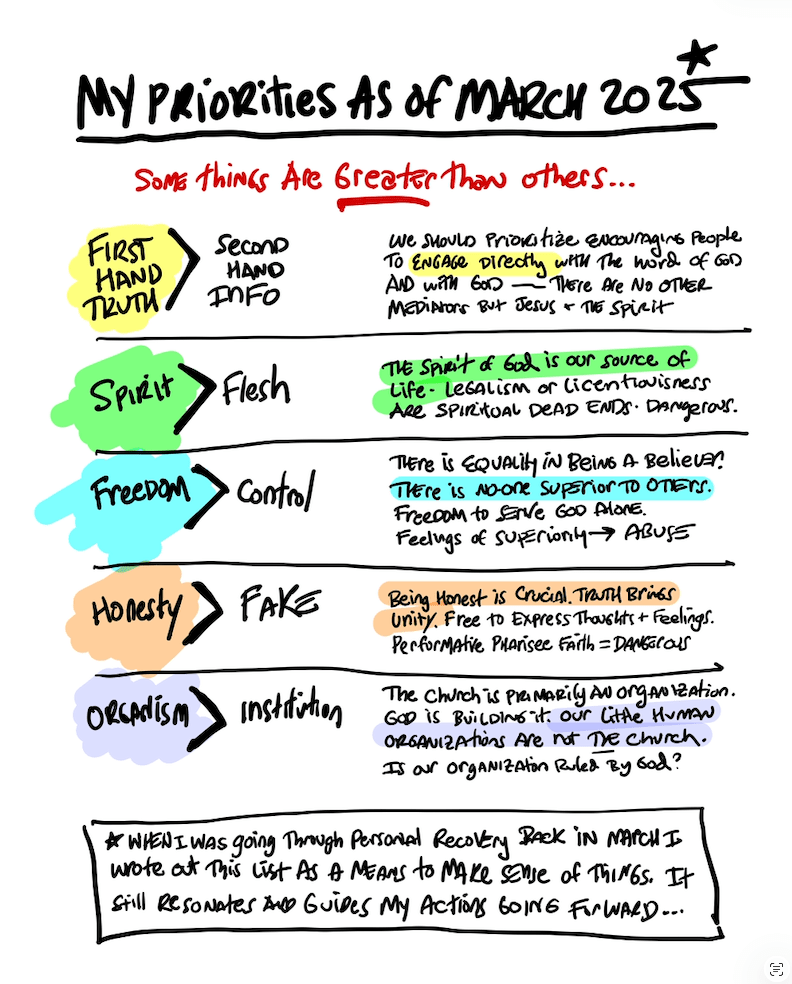

 First Hand Truth
Leave a comment