
Sunday, November 23
Last Sunday was nice. Dinah and Jared and I did some worship songs. We looked at the first of the Servant Songs in Isaiah, 42:1-9. The Messiah was to bring Justice to the world, to the ends of the world. Justice is still an issue, and still largely unfinished it seems, though something has broken through. We have the ability to know God intimately like people before Christ did not. We can let him rule. We can find our peace in his rule.
This Sunday, 9:30-11am, we are meeting at Continental for a study focused morning. We can split into groups and do a study together. I will try to encourage us to grow spiritually through the Word of God.
Sunday, November 16
We had a small but mighty group on Nov 9, we had a very good time studying scripture together and just talking about life. We looked at the Discouraged and Disheartened study below on the Nov 9 study options. Some pretty meaningful conclusions were drawn in our hearts.
This Sunday, 9:30am to 11am / Continental Pastries on Columbia Ave.
This week will be a worship-focused meeting / we are going to enjoy songs of worship together, scripture being read (want to help text me), testimony time (again, text me), a longer message time, and a bit more. I’ve rounded up a few musicians to help and they will if life doesn’t get in the way.
Our passage of study is found in Isaiah 42:1-9, it is the first of the Servant Songs of the book of Isaiah. Isaiah discusses the coming Messiah as a Servant of his who will do his bidding perfectly (unlike Israel, who does not do this). Who is this Servant? What is he like? What will he do? This is the discussion. Between now and Christmas, I intend to preach or teach on these “songs” and Jesus as the Messiah.
PREP / Read the passage and list the facts as to (1) what this Servant would be like, and (2) what he would accomplish. This would be a great exercise.
Sunday November 9
- After our discussion last Sunday it seems the concensus is that we should continue meeting at least until the end of this year. We also talked about some changes to our program and played with different timings of meetings and focuses. From that discussion I’ve decide we will try the following for a few weeks and see if it is helpful. I’m not sure any of us want to get captured for hours on Sunday mornings, and I am desirous of not having that happen. Let’s try the following…
- Two week rotation.
- Week 1 / 9:30-11am / Study Week / group studies or individual studies with assistance and encouragement, followed by a time of sharing on what God is talking to you about (sharing is optional).
- Week 2 / 9:30-11am / Worship Week / a time of worship, scripture reading, testimony, prayer, and message (sometimes longer, sometimes shorter). Optional study help from 11am to noon for people who want more direction or equipping for study.
For This Sunday / Study Week /
For direction, I have come up with four different guided studies, any of which could be helpful to our spiritual growth. We will split into study groups and tackle one of these per group. When we’ve studied for awhile we will gather and encourage each other with what has been studied. Want to get a head start or help make your decision early? Download below.
Summaries of studies…
- Discouraged and Disheartened / dealing with feelings of discouragement? Scripture can help.
- Staying Connected to Jesus / This one looks deeper into the idea of “abiding in Christ.” So crucial.
- God’s Immutability / God doesn’t change, God is greater than us. Why is that important?
- Overview of Romans 8-8 / Paul discusses what it means to be a sinner and a Christian at the same time. How do live a new kind of life?
To Consider
Proper Church Leadership document I studied and wrote in May, after I kept seeing a particular group of people take a very hard-line stance on Church leadership that is unbiblical.
THE FUTURE >>>
<<< THE PAST
This Sunday November 2
- 10am – 11:30am / Continental Pastries
- Word of the Week / Ephesians 4:11-16 / Two choices; manipulation or truth
- Study Beforehand / I would encourage you all to read Ephesians 4:1-10 as they will not be the focus of the morning’s passage, but the context of it’s words.
- Discussion / Where do we go from here?
Sunday October 26
Andy led the group through a few passages. Some discussion questions.
Some Aspects
- McNally’s in Illinois and Wisconsin this weekend.
Sunday October 19
10-11:30am, @ Continental Bakery / BC
- An encouragement to Study Scripture /
- An interactive group and individual study of Revelation 2-3 / Jesus Critiques the Churches / consider downloading worksheet below, Seven Letters, Seven Churches. In the book of Revelation Jesus offers both encouragement and critique to the churches of the day through these two chapters. Perhaps consider focusing on one of the seven churches and filling out the chart like the sample church of Ephesus, which is completed as an example.
- A Snack Break / grab a granola bar, a cup of water, or a glass of juice or coffee.
- A Worship Time / for the last 20 minutes of our time together.
Sunday October 12
Continental Bakery, 10am to 11:30am
The Message: The Body of Christ
If you want to study or prep in any way, consider self study / here
Aspects
- A message/discussion of a scriptural passage / Rick McNally
- Some worship! / Rick McNally
- A Scripture Reading / Andy Rowles
- Some corporate prayer / Katherine organizing this
- A bit of a discussion on the questions below…
- At the end of our time / a potluck to celebrate Molly’s 21st Birthday / Rick and Katherine will bring pulled pork and mac and cheese, and any additional items would be great!
Sunday, October 4
Continental Bakery, 10am to 11:30am
The Lesson: We examined Hebrews 10:19-25. See the written article here.
If Jesus was the high priest and made the great sacrifice, and if it is all true, then…
- Draw near to God
- Hold on to the Profession of Your Faith
- Stir One Another up to Love and Good Deeds
Some Aspects
- A time of worship / Fairest Lord Jesus / God of Wonders
- A time of reading the Word / two passages /
- A time of learning from the Word / Back to Basics
- Some open discussion
- What is the church?
- What are leaders and elders?
Recommended Resources
A Church Called Tov: Forming a Goodness Culture… / McKnight, Scot, Laura Barringer, and Tish Harrison Warren. A Church Called Tov: Forming a Goodness Culture That Resists Abuses of Power and Promotes Healing. Carol Stream, IL: Tyndale Elevate, 2020. Print.
Summary of Second Half of the Church Called Tov (goodness)
The first part of this book is about church power abuse and spiritual abuse. The second half describes strategies to help organizations avoid such things.
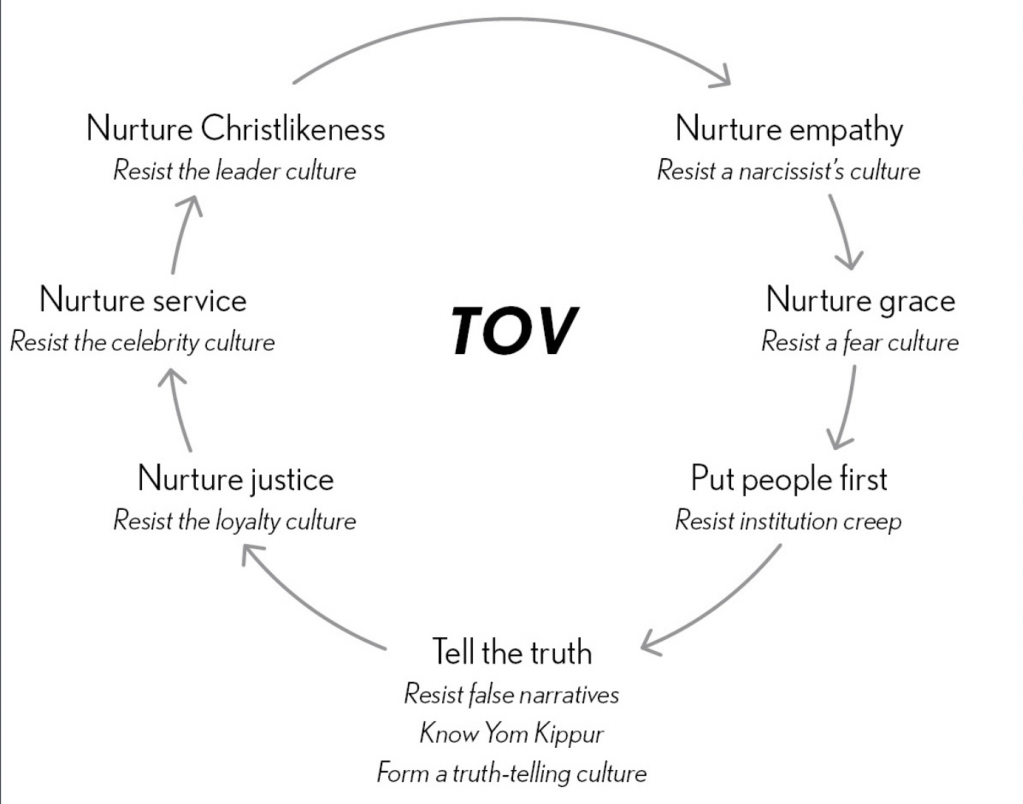
Summary…
A Church Called Tov / A summary of the Second Half of the Book.
Creating a goodness culture / avoiding toxic cultures
If we as individuals in the church will pursue Jesus’ tov way of life, we will help to create a tov church culture. A “church called tov” is designed by God to accomplish his purpose in the world by doing it his way. We don’t create tov churches in our own strength, by grit and determination or by clever programming. Tov churches are the work of God’s Spirit set free to create tov—and the eight other fruitful attributes outlined by Paul in Galatians 5. What God has in mind is a loving, joyful, peaceful, patient, kind, tov, faithful, and self-controlled body of believers about whom he can say, “That’s it! That’s what I designed! That’s excellent! That’s good! That’s tov!”
In the chapters ahead, we will look at seven key elements of a tov culture: (1) empathy and compassion, (2) grace and graciousness, (3) putting people first, (4) truth telling, (5) justice, (6) service, and (7) Christlikeness. A toxic culture will resist a tov culture, but a tov culture, by the power of the Holy Spirit, will go to battle and overcome a toxic culture.1
1 Scot McKnight, Laura Barringer, and Tish Harrison Warren, A Church Called Tov: Forming a Goodness Culture That Resists Abuses of Power and Promotes Healing (Carol Stream, IL: Tyndale Elevate, 2020), 96.
Logos AI Summary / The text discusses the significance of church culture, emphasizing that it shapes individuals’ relationships with God and influences their moral character. A healthy church culture fosters goodness, while a toxic one leads to corruption. The author argues that choosing a church is essentially choosing a culture that will impact personal development. The concept of “tov,” a Hebrew term for goodness, is central to the discussion, highlighting that God embodies goodness and desires His creation to reflect this quality.
The text outlines that goodness is not inherent to humans but is a manifestation of God’s grace and the Holy Spirit’s work in believers. It emphasizes that living a “tov” life involves active goodness, generosity, and resistance to evil. The author illustrates this with examples, including the life of Jesus, who exemplified “tov” through His actions and teachings.
The text concludes by asserting that creating a “tov” church requires the collective effort of individuals pursuing Christlike virtues, facilitated by the Holy Spirit. It introduces seven key elements essential for nurturing a “tov” culture: empathy, grace, prioritizing people, truth-telling, justice, service, and Christlikeness. Ultimately, the text encourages churches to strive for a culture of goodness, which aligns with God’s design and approval.
Nurturing empathy / resisting a narcissist’s culture
Consider not only the powerful and young, but the marginalized, the women, the outcasts among you. They too are God’s people.
Logos AI Summary / The text discusses the importance of empathy and compassion within the church, drawing on the example of Jesus, who prioritized the marginalized and wounded. It highlights a tragic incident of gun violence in El Paso, where the community rallied around a grieving widower, Antonio Basco, demonstrating empathy and compassion. This event exemplified the concept of “tov,” or goodness, which the church is called to embody by supporting the needy and oppressed.
The text emphasizes that churches must cultivate a culture of empathy, particularly towards women and marginalized groups, who often face neglect or judgment. It critiques male-centric church cultures that silence women’s voices and contributions, advocating for a more inclusive environment where all individuals are valued as image-bearers of God.
To foster a culture of “tov,” churches should tell the stories of women from the Bible and church history, recognize local contributions, and promote women’s roles in church activities. By doing so, churches can create a more compassionate and supportive community that embraces diversity and nurtures the gifts of all members. The ultimate goal is to transform the church into a place where everyone feels seen, heard, and valued, reflecting the character of God through empathy and compassion.
Nurture grace / resisting a fear culture
Logos AI Summary / The text discusses the concept of “tov” churches, which are characterized by a culture of grace and goodness, primarily shaped by pastors who embody these values. Pastor Harold Senkbeil’s experience with a dying woman named Roberta illustrates the tender grace that pastors are called to provide. He emphasizes that true pastoral care involves offering life through grace, contrasting it with toxic church cultures that exploit and induce fear.
The text outlines seven features of a grace-filled culture, beginning with the understanding that grace is a gift from God, leading to forgiveness and the formation of personal relationships. This grace fosters a sense of equality among church members, eliminating hierarchies and promoting a family-like atmosphere. The Holy Spirit plays a crucial role in transforming individuals into a cohesive, loving community.
Additionally, the text highlights the importance of trust in building a grace-based church, noting that power and fear undermine trust, while grace fosters it. Trust leads to reciprocity, where members give and receive grace, creating a supportive environment. The text concludes by emphasizing the need for space within the church for growth, learning, and forgiveness, which are essential for nurturing a culture of grace. Overall, the message advocates for a church that prioritizes love, trust, and grace over fear and power dynamics.
Put people first / resist institutional creep
Logos AI Summary / The text discusses the concept of “Tov,” which emphasizes a people-first culture within churches, prioritizing empathy, compassion, and grace over institutionalism. It warns against “institution creep,” where organizational needs overshadow the well-being of individuals, leading to a coercive environment. The narrative highlights Fred Rogers as a model of a people-first perspective, showcasing his commitment to treating each child with dignity and respect, reflecting the core values of Tov.
Mitch Randall’s definition of theological malpractice is introduced, emphasizing the importance of valuing humanity over institutional reputation. The text outlines essential practices for fostering a people-first church culture, including treating individuals as people, enfolding them into the community, recognizing their divine image, treating them as siblings, and developing a compassionate outlook akin to Jesus.
The text stresses the significance of relationships in a church setting, advocating for genuine connections that foster belonging and support. It underscores the need to view all individuals as image bearers of God, deserving of respect and honor, regardless of their circumstances. The essence of a people-first culture is rooted in treating others with love and care, akin to familial relationships, and nurturing a community that reflects the values of Tov. Ultimately, the text calls for a shift from individualism to committed relationships, emphasizing the importance of truth in maintaining a healthy church culture.
Tell the truth / resist false narratives / know Yom Kippur / Form truth telling culture
Logos AI Summary / The text discusses the importance of truth-telling within Christian communities, emphasizing that children naturally express honesty and that adults can learn from this. It argues that truth is central to the Christian faith, as it is embodied in Jesus Christ, and that churches should cultivate a culture of truth-telling. This culture requires knowing, doing, and surrendering to the truth, resisting falsehoods, and fostering an environment where honesty prevails.
The text highlights the challenges of truth-telling, especially in the context of church leadership and abuse. It recounts personal stories of individuals who faced backlash for speaking out against misconduct, illustrating the need for churches to confront their past and acknowledge wrongdoing. The authors advocate for a “Yom Kippur moment,” a time for confession and repentance, to ensure that truth-telling becomes foundational in church culture.
They suggest that churches should regularly engage in practices similar to Yom Kippur or Lent, focusing on confession and seeking forgiveness. The text concludes by proposing a litany of confession that churches can use to acknowledge their failures and affirm truth-tellers, emphasizing that truth-telling is essential for healing and reconciliation within the church community. Ultimately, the authors call for a commitment to truth as a means of fostering goodness and justice in the church.
Nurture justice / resist the loyalty culture
Logos AI Summary / The text discusses the importance of justice within TOV (goodness) church cultures, contrasting it with toxic church environments where loyalty to leaders often supersedes the pursuit of justice. Rachael Denhollander’s courageous advocacy against Larry Nassar, a convicted sexual abuser, is highlighted as a pivotal example of prioritizing justice over loyalty. Despite her efforts to expose abuse within the Sovereign Grace Churches (SGC), she faced isolation and backlash from her church community, which prioritized loyalty to its leaders over the truth. This toxic loyalty is illustrated through various church leaders, including Bill Hybels and James MacDonald, who fostered environments where disloyalty was condemned, even when it meant ignoring serious allegations of misconduct.
The text emphasizes that true justice, as defined by Christian principles, aligns with the teachings of Jesus and requires a commitment to doing what is right, even at personal cost. It calls for churches to cultivate a culture of justice by recognizing injustice, supporting victims, and sharing stories of moral courage. The narrative of Martin Niemöller serves as a historical example of the consequences of failing to speak out against wrongdoing, reinforcing the need for churches to prioritize justice and integrity over loyalty to flawed leaders. Ultimately, the text advocates for a shift towards a TOV culture that embodies righteousness, compassion, and accountability, reflecting God’s standards of justice.
Nurture service / resist the celebrity culture
Logos AI Summary / The text discusses the contrasting roles of celebrity pastors and servant pastors within church culture, emphasizing the importance of a service-oriented environment, termed “tov.” The authors, reflecting on their experiences in the Cotswolds, draw parallels between driving on the opposite side of the road and the differing approaches of pastors. Celebrity pastors often seek personal glory, fostering a toxic culture where power and fear dominate, while servant pastors prioritize the congregation’s needs, embodying grace and empathy.
The text highlights Jesus’ teachings on servanthood, illustrating that true leadership involves serving others rather than seeking recognition. It warns against the pitfalls of a celebrity culture, where pastors may become self-centered and lose sight of their mission. The authors argue that a genuine service culture requires humility, transparency, and a commitment to ordinary acts of kindness, rather than seeking applause for heroic deeds.
They suggest practical steps for developing a servant culture, such as leaders modeling service, avoiding public recognition for acts of kindness, and sharing leadership roles. The text concludes by emphasizing that true greatness in the church comes from selflessness and a focus on serving others, aligning with Jesus’ example of humility and sacrifice. Ultimately, the authors advocate for a church culture that resists celebrity dynamics and fosters genuine community and service.
Nurture Christlikeness / resist the leader culture
Logos AI Summary / The text discusses the concept of “tov,” or goodness, within church culture, emphasizing the importance of nurturing Christlikeness through empathy, compassion, and service. It critiques the shift in churches towards a meritocratic culture focused on achievement and leadership, which has led to a toxic environment where pastors are viewed as business leaders rather than spiritual guides. This shift has redefined pastoral roles, prioritizing organizational success over spiritual formation.
The authors highlight the dangers of adopting business principles in church leadership, arguing that this undermines the biblical understanding of pastoring. They advocate for a return to a model where pastors nurture spiritual growth and community, rather than merely managing an organization. The text contrasts two models of church culture: one centered on leadership and metrics, and another focused on spiritual development and Christlikeness.
The authors call for a reimagining of church as a community dedicated to nurturing individuals in their faith journey, emphasizing that success should be measured by spiritual growth rather than numerical metrics. They propose practical steps for churches to cultivate a “tov” culture, including expressing a mission centered on becoming more like Jesus, allowing the Holy Spirit to guide church activities, and fostering collaboration among congregations.
Ultimately, the text encourages churches to prioritize relationships, community, and spiritual formation, aligning with the biblical vision of the church as a living body under the headship of Christ.


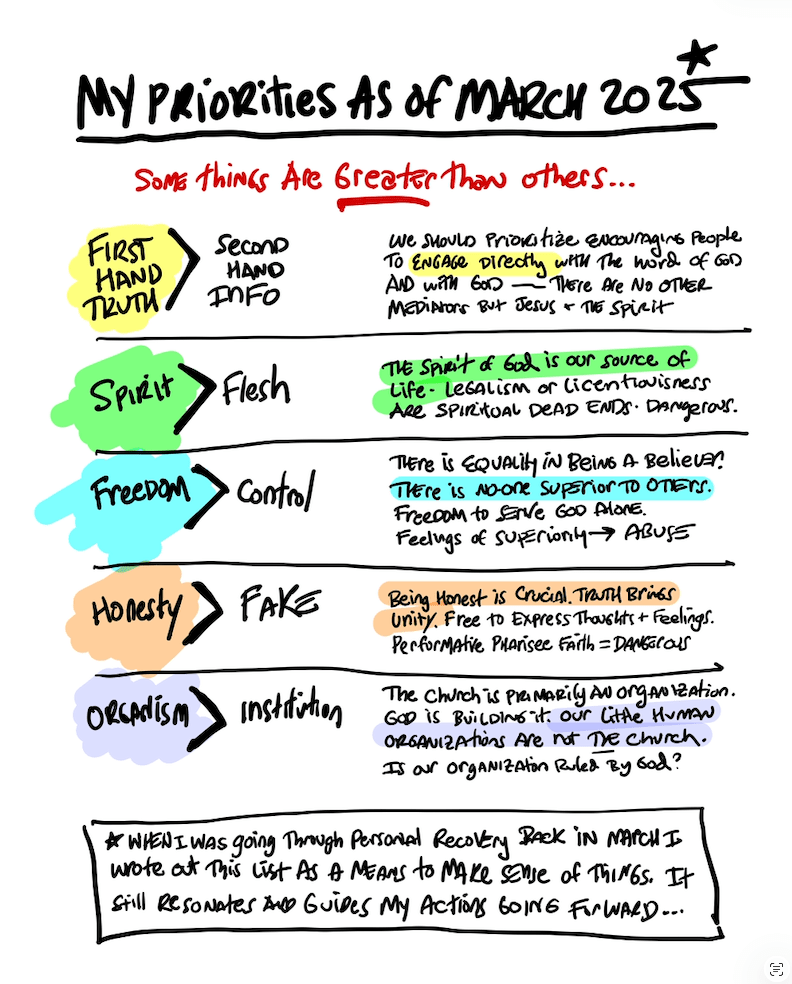



 First Hand Truth