

Other Doctrines that are negatively affected by Authoritarian Leadership Structures
RLM / May 2025
There are a number of other doctrines that are compromised when people believe that obedience to elders should be something that is without limit or without proper accountability. These are very significant when discussing this issue.
Scripture is an intricate web, and you cannot tamper with one strand without bothering many, many others. Please do not make your theological interpretations or applications without seeking the whole span of Scripture and theology. Each idea touches so many other ideas, and a simplistic interpretation is simple to do and dangerous.
The Utter Disdain God has for Arrogance and Pride
The NT has a plethora of Greek words to describe pride and its effects on people. It was the first sin in the garden, and it is always painted as a bad thing in scripture. A simple search in Bible software can provide five separate word families that would begin a simple study of arrogance in Scripture, we will take a quick look at each.
- physioō / to be puffed up, 1 Corinthians 13:4
- katakauxáouai / to be boastful, to exalt over, Romans 11:18
- hyperēphanos / distinguished, outstanding, looking better than others, 2 Timothy 3:2, James 4:6
- authadēs / presumptuous, arrogant, self-willed, pleasing self, Titus 1:7
- alazoneia / one who makes more of himself, self-important, James 4:16
These words and more make up the large tomb of criticism of God toward prideful attitudes and actions. God himself resists such people.
Arrogance is of the flesh, not the Spirit. It is contrary to God and works directly against him.
Main Idea: develop and find leaders who, like God, despise looking down on other people, who despise making themselves great.
The Deep Example of Humility in Christ
On the other side of the coin, we have humility. Humility is expressed wonderfully in Philippians 2 as we learn simply to behave a certain way toward others because it was the way Jesus treated people as well.
In summary, we find the following instructive points:
- Do nothing from selfish ambition / focusing on personal success
- Do nothing from conceit / unduly vain and conceited actions
- In humility / recognize your sin and creatureliness, lowliness of mind
- Count others more significant than yourself / hold as above, hold as superior
- Look toward other people’s interests / look out for other people’s welfare
- Have the mind among yourselves / do what Christ did, together, mutually.
- Humble yourself / do what Christ has done, consider others more
- Become obedient to the point of death / do so to a great extent
- When we have done these things, God himself will lift us up. A proper understanding of humility will and can cure theological arrogance. The Holy Spirit, if submitted to, can help bring this about in our lives.
I would encourage all who read this to delve into an in-depth study of humility from Scripture and do your best not to just read the words but put “humility” into practice; become foot washers of each other, not lords and bosses. This is Christ’s will.
Main Idea: Good leaders should be men of humility, who put others above themselves.
The Mind of Christ
Where is unity found? It is found in having the mind of Christ, to have that mind and submit to that mind and not to other people. The mind of Christ is found through the submission to the Spirit, to the submission to the attitudes of Christ; humility, self sacrifice and care of others outside of the needs of ourselves. When we all are submitting to Christ we find humility and unity, when we find ourselves being forced to submit to the subjective and oft wrong wills of human leaders we will not and cannot find unity. Unity is found in following scripture and mutual submission, not a false submission to a human authority. This is, as Jesus called it, a worldly endeavor that Jesus does not smile upon.
You can research this idea in a few different passages: 1 Corinthians 2:16; Philippians 2:5-8, Romans 12:2, Col 3:2, Romans 8:6-7.
Main idea: Unity in the Church is not found in following the mind of a human or a group of humans, but rather in adopting and submitting to the Mind of Christ.
The Equality we Enjoy in Christ
This theological idea is built on the work of Christ and the indwelling of the Spirit. All people are saved and sanctified by the same Lord.
The oneness we all share (Philippians 2:1-2) is evident in Christ. Jesus has broken down the hostility wall between Jews and Greeks, between slaves and free men, between people of different nations so that we can be one in Christ (Col 3:11, Romans 10:12-13, 1 Corinthians 12:13). Each Christian, whether new to the faith or of aged learning, has equal standing with God (2 Peter 1:1). Even the obvious difference between the sexes is somewhat equated through Christ (Gal 3:26-28).
We have no caste system in Christianity. There should be no caste system in Christianity. We have different roles, and obviously these have different responsibilities. To use our different roles to subjugate others under ourselves is against Jesus’ very desire for leadership.
Main Idea: We all have equal standing before God in Christ Jesus.
Our Freedom in Christ
In Christ we have freedom. The basic bible idea here is that we have been set free to serve God alone. The freedom that Jesus gives is not symbolic but actual (John 8:36). It is the freedom to be set free from the bondages of sin (Romans 6:18), the privilege and honor to have not religious institutions or laws guiding us but rather the freedom giving Spirit of God indwelling (2 For 3:17). We no longer live to please men but God, and our service should be to him alone (Colossians 2:8, 1 Thess 2:4, 1 Corinthians 7:23).
Christian freedom is subject only to the self-imposed constraint of Christian charity. No-one may dictate what Christians must do in indifferent matters such as food or the observance of special days (see Adiaphora); it is for them to restrict their freedom voluntarily if its exercise may harm the spiritual life of others. Plainly, true spiritual freedom will not lead Christians into courses of action which enslave them, nor can it encourage practices which are generally unhelpful and not conducive to the healthy upbuilding of the whole believing community.
Main Idea: we are free to serve God as the Spirit leads, not at the pleasure of men.
Serving God Alone
This might seem basic, but it is foundational. We must be people whose attention and service to God is absolute, and such service is to God and his indwelling Spirit — not other organizations, not other men, not other doctrines, but Christ alone.
This is expressed in the Law (Exodus 20:3, Deuteronomy 6:13, 10:20). It is expressed in the historical biblical books (1 Samuel 7:3), it is expressed by Jesus under temptation (Matthew 4:10) and in his teaching (Matthew 6:24), it is expressed by Peter in Acts when people were trying to tell him what to do (Acts 5:29).
Now, it is true that we are to mutually serve one another (1 Peter 4:10-11) and mutually submit to one another (Ephesians 5:21), but we are to serve no man.
Also in this vein is the concept of not being of this “this leader” or “that leader,” but rather seeking Christ and him alone as you leader. To seek followers to follow a particular person, idea, or movement in place of Christ is wrongheaded and dangerous. Paul puts it this way, “For when one says, “I follow Paul,” and another, “I follow Apollos,” are you not being merely human?” The idea here is to serve God alone.
Main Idea: Our service to God is stifled or twisted if it is through another entity. God wants us to have a mind of singular service. We need to not call individuals to follow us supremely.
We Have Only One Mediator
Again, this is simplistic. We have but one mediator between God and man, that is, the person of Jesus Christ (1 Timothy 2:5). He is not only a priest but he is the high and perfect priest (Hebrews 8:6ff). He is our advocate (1 John 2:1). He is the way, the truth, and the life (John 14:6).
To say that any human pastor or any human institution has, in any way, sway or replacement of this mediator relationship we enjoy in Christ is dangerous.
Main Idea: We have only one mediator between us and God, and it is not any human or institution.
The Priesthood of All Believers
Another way to describe the equality of all Christians before God is in the phrase “the priesthood of all believers.”
The Protestant doctrine that all Christians stand before God through the High Priest Jesus Christ and without the mediation of other people. In opposition to the mediatorial role of Catholic priests ordained through holy orders, the Reformers affirmed the personal responsibility of all people to hear the gospel and be saved. A corollary is that all church members are divinely appointed and empowered to minister to one another through teaching the Word, praying, and, for some, choosing church leaders. This position does not do away with the office of ministry to which God appoints certain church leaders.
The reverse is also true, the provision of leaders and teachers by God does not negate the role of all Christians to be spiritually active in mutual accountability, mutual love, mutual study and all aspects of the Christian life.
Main Idea: Elders and leaders need to recognize the “brotherhood” of saints that God has also provided for them, as Jesus taught.
Teaching the Scriptures / Who is primarily the teacher?
While God graciously gives people in our lives to teach and to train us — fathers, mothers, pastors, teachers — God has seen fit to provide for us the greatest teacher in Christ Jesus and the Holy Spirit.
1 John 2:27 / But the anointing that you received from him abides in you, and you have no need that anyone should teach you. But as his anointing teaches you about everything, and is true, and is no lie — just as it has taught you, abide in him.
We have all we need to be taught the Word in the Holy Spirit. If we replace him with a human teacher, we short-circuit what can be done. A pastor can only be in one place at one time — the Spirit can be active in the lives of all the members of a church and teaching and guiding at any time of the day.
This is expressed by Jesus (John 14:17, 26, John 16:31) as well as the Apostle John (1 John 2:20-21). This is expressed in Matthew 23, which was previously discussed above, where Jesus said we have “one teacher” and “one instructor” (Matthew 23:7-10).
The role of human teachers is to encourage the pursuit of truth and push people into the reliance of the Holy Spirit, not to have them develop in other people a reliance on them for knowledge, that is dangerous. This may actually constitute “drawing away disciples after [themselves]” in Acts 20.
If elders or leaders attempt, intentionally or unintentionally, to suppress or supersede the role of the Holy Spirit as teacher in the lives of their congregation they can do immense damage.
Main Idea: If we get the idea that we are the “teachers” of everyone else and push for that role, we short-circuit the Holy Spirit’s ministry in people’s lives.
Submitting as an Individual Act of Will, not Subservience
1 Corinthians 9:19 (ESV) / For though I am free from all, I have made myself a servant to all, that I might win more of them.
Ephesians 5:15–21 (ESV) / 15 Look carefully then how you walk, not as unwise but as wise, 16 making the best use of the time, because the days are evil. 17 Therefore do not be foolish, but understand what the will of the Lord is. 18 And do not get drunk with wine, for that is debauchery, but be filled with the Spirit, 19 addressing one another in psalms and hymns and spiritual songs, singing and making melody to the Lord with your heart, 20 giving thanks always and for everything to God the Father in the name of our Lord Jesus Christ, 21 submitting to one another out of reverence for Christ.
Submission is not subservience. It is the intentional act of the will, when a free being personally (of his own choice, not the choice of others) submits to another. We see this clearly in the Corinthian passage above, where Paul states that from a stance of freedom he “submits” to others. He is not putting himself under their command, but choosing to submit, to give up his own rights and will.
Likewise in the Ephesian passage Paul is encouraging us to all mutually submit to one another — this is not to put ourselves under someone’s command, but to show deference to others. Though we are told to “submit to one another out of reverence for Christ most of us would agree that if another believer told you to commit a murder or a lie you could freely and with a clear conscious choose to not submit. This would in this instance be the right thing to do, as a person chooses to follow God as opposed to man.
We can see this even in our command to submit to every authority. When the authority is asking us to do something that is good and for our benefit and in line with the desires of God, it is the principle that we be obedient. If that same government tells us to stop worshipping Jesus or not share the gospel, we should respond like Peter and John did to the powers that be at that time — “we choose to obey God, not men.”
Submission is not subservience. Subservience is not freedom, but tyranny. Submission is beautiful, personal, and volitional. Subservience is forced submission, which is not submission at all.
Main Idea: When people ask for your submission, let them know that they need to be submissive back, and that you need to serve God alone.
Mutual Submission
Submission is not subservience. It is a personal, volitional choice to put ourselves under others. This is a choice we make before God. It must be stressed here that it is a mutual thing — not one that is ever a singular direction only.
In scripture, as stated above, we are called to live in such a way as to be “submitting to one another out of reverence for Christ.” The Greek word for “one another” is a “reciprocal pronoun, necessarily only plural” as it denotes for each person who receives this command to also submit. So, we are always to submit to each other.
In the immediate context of the verse, we see Paul asking wives to submit, children to submit, and children to submit. Within that context, we see also there is a reciprocal plea by Paul to tell husbands to also act in such a way as to submit to them in love, or in the case of childhood, to act in such a way as not to provoke anger, or masters of bondservants to not threaten them. Submission is always mutual.
Main Idea: Mutual submission demands mutual submission. If one side is not submitting, it is not submission but subjugation. We must be careful how we treat each other, not abusing one another with words and threats.
Study Like the Bereans
If we are to just sit down and listen to our leaders and trust them regardless of what they say, why were the Berean Christians praised for their examination of Scripture to confirm the words Paul was saying? This was an apostle we are talking about; they were confirming with their own study the Apostle’s words.
Paul could not have known that the Bereans would become a model for how to study the Bible. Luke gave a threefold description of the Bereans’ response to Paul’s preaching. First, they approached Paul’s teaching with some open-mindedness. The expression more noble-minded than the Thessalonians means that the Bereans were objective in their evaluation of Paul’s message. They judged his message by the standard of Scripture rather than their preconceived prejudices. Second, they also received the Scriptures with great eagerness. They had an appetite to learn. Finally, they examined the Scriptures daily, to see whether these things were so. They carefully evaluated Paul’s message to determine for themselves if it was true.
The word that Luke uses to describe them was “more noble” — the Greek word here in this context means “open-minded” with a “willingness to learn.” They were also described as “eager” — they were zealous to study God’s word and to get it right.
Trust, but verify. That is what God encouraged in the early church in the book of Acts. Why would we stop this behavior? Why would we want people to not keep us accountable?
Main Idea: God desires us to keep each other accountable, not just simply swallow everything that everyone says, including what our pastors and elders say.
Individual Conscience
Another way leaders who overreach their authority can damage the church is found in the concept of individual conscience. During the pandemic era, there were many, many different opinions on how to manage all the differing directives, injunctions, mandates, and perhaps even a few laws that were sent out from local, federal, and state officials. People had varying opinions on what of this to follow; some believed in following everything to the letter, others believed in hardly listening to any of it.
Many people felt that much of this was an overreach by the government on the freedoms of people more than a means of protecting people from harm. I can personally attest to speaking to well over 30 people deeply about these things that some of the claims on both sides were to the level of a Christian conviction — We felt different about how to go forward.
Our small church responded by letting people have individual choice based upon their own convictions; we provided a fully masked service and a second service where you could choose to be masked or not. We tried to respect each other — not condemn each other.
This had its origins in scripture. While some early believers sought to follow every dictate of the Mosaic Law (it’s the Law, you know), many Gentiles and some Jews believed that they could make a choice.
Romans 14:5 / One person esteems one day as better than another, while another esteems all days alike. Each one should be fully convinced in his own mind.
We survived COVID without losing many people at all, while many churches we know were losing scores. Respect for others won the day. God’s gracious letters helped us through.
Main Idea: If elders overreach their authority, they can play havoc with this plea to respect other people’s conscience.
When An Authority Goes Contrary to God or the Word
Let’s say that the harsher idea of “obey your elders” is correct, even for the sake of argument. I believe I’ve shown that the extreme interpretation of “do what we say, no matter what, sit down and shut up” is not correct, but let’s say that it was for a minute.
Even if it were right, would it still be true if there was an abuse of power, or an abuse of a person, behind it? Should there be no accountability? Would people be able to investigate carefully the claims of wrongdoing or should those claims be covered up? How far should we take this?
John MacArthur pastors in California. Their COVID injunctions were very restrictive, and also very selective — some groups must shut down, other groups could have large rallies. His church fought legally these injunctions and had to give some sort of rationale to his people, and to the rest of the world. Their church decided to fight the restrictions in real time, and in legal battles. Here is what he wrote in a blog during that time.
Please notice in verses 1 and 2 that government is from God, by God, of God. It is designed as a necessary restraint in a world of sinners. Verses 3 and 4 tell us it is not a threat to those whose behavior is good, but evil. It is those who do evil who should be afraid, not those who do good. In fact, it offers praise to those who do good, and brings wrath on those who do evil. And rulers actually, according to verse 6, are servants of God, devoted to that service.
This is God’s design for government. The problem is, when government ceases to function by God’s design, it yields up its authority. The same would be true in a family. God’s design is that the father lead the family. When the father leads in a destructive and evil way, he yields up the right to exercise that God-given authority…
When government turns the divine design on its head and protects those who do evil and makes those who do good afraid, it forfeits its divine purpose.
MacArthur argued that when a legitimate authority works against its purpose, it yields up its authority. If the church leaders were truly given divine authority (one uniquely above all other people) and they misused it, they too should be ignored at best or held accountable.
Main Idea: abuse of authority means a loss of authority.
God as Our Judge
Another concept that can be trampled upon is the idea that God is our judge. We have no other.
James 4:12 / There is only one lawgiver and judge, he who is able to save and to destroy. But who are you to judge your neighbor?
Romans 14:4 / Who are you to pass judgement on the servant of another? It is before his own master that he stands or falls. Nd he will be upheld, for the Lord is able to make him stand.
We do a great disservice to God by attempting to become the judges of others. We make decisions, but we do not rule one another.
Paul’s View of the Equality of Leaders, God Shows No Partiality
Galatians 2:1–10 (ESV) / Then after fourteen years I went up again to Jerusalem with Barnabas, taking Titus along with me. 2 I went up because of a revelation and set before them (though privately before those who seemed influential) the gospel that I proclaim among the Gentiles, in order to make sure I was not running or had not run in vain. 3 But even Titus, who was with me, was not forced to be circumcised, though he was a Greek. 4 Yet because of false brothers secretly brought in—who slipped in to spy out our freedom that we have in Christ Jesus, so that they might bring us into slavery— 5 to them we did not yield in submission even for a moment, so that the truth of the gospel might be preserved for you. 6 And from those who seemed to be influential (what they were makes no difference to me; God shows no partiality)—those, I say, who seemed influential added nothing to me. 7 On the contrary, when they saw that I had been entrusted with the gospel to the uncircumcised, just as Peter had been entrusted with the gospel to the circumcised 8 (for he who worked through Peter for his apostolic ministry to the circumcised worked also through me for mine to the Gentiles), 9 and when James and Cephas and John, who seemed to be pillars, perceived the grace that was given to me, they gave the right hand of fellowship to Barnabas and me, that we should go to the Gentiles and they to the circumcised. 10 Only, they asked us to remember the poor, the very thing I was eager to do.
Lest we begin to think the the New Testament puts elders or Apostles on pedestals, we must first be confronted with Paul’s own attitude toward the elders and apostles in Jerusalem. Paul’s view of the authority of Jerusalem is not outright, but rather with the respect he had toward any other person — he believed in not showing partiality even to these people. Consider his words above, “… and from those who seemed to be influential (what they were makes no difference to me; God shows no partiality) those, I say, who seemed influential added nothing to me.”
In other words Paul was saying that God had shared the gospel with him, and he got it straight from the Lord, and he took it to the leaders to compare notes — they didn’t add anything to it. And if they tried, he would have told them no, because it was better to obey God than man.
It was after this passage that Paul discusses his confrontation of Peter for public sin. Paul did not consider these men greater than he, or less than he, but equal. This is the nature of leadership.
No Partiality, continued
The concept of showing no particular partiality to people regardless of their authority, or their lack of authority, is embedded in scripture both in the New and Old Testaments. To come to the conclusion that elders always are right or innocent while others are not is a travesty of Biblical justice. Prejudice and prejudging on basis of authority, riches, or the like is wrong to the core. This is obvious and does not need to be explained more than this. Please consider the following verses.
Deuteronomy 1:17 / You shall not be partial in judgment. You shall hear the small and the great alike. You shall not be intimidated by anyone, for the judgment is God’s. And the case that is too hard for you, you shall bring to me, and I will hear it.’
Leviticus 19:15 / You shall do no injustice in court. You shall not be partial to the poor or defer to the great, but in righteousness shall you judge your neighbor.
James 2:1–4 (ESV) / My brothers, show no partiality as you hold the faith in our Lord Jesus Christ, the Lord of glory. 2 For if a man wearing a gold ring and fine clothing comes into your assembly, and a poor man in shabby clothing also comes in, 3 and if you pay attention to the one who wears the fine clothing and say, “You sit here in a good place,” while you say to the poor man, “You stand over there,” or, “Sit down at my feet,” 4 have you not then made distinctions among yourselves and become judges with evil thoughts?
1 Timothy 5:21 (ESV) / In the presence of God and of Christ Jesus and of the elect angels I charge you to keep these rules without prejudging, doing nothing from partiality.



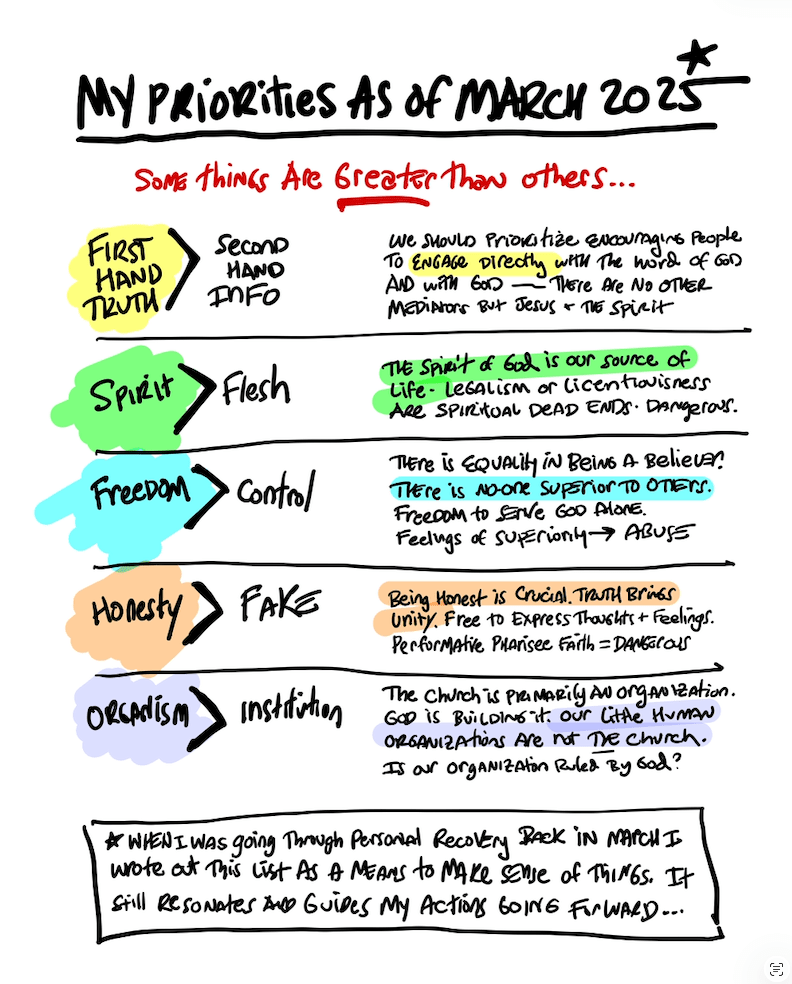

 First Hand Truth
Leave a reply to alphaandomega21 Cancel reply